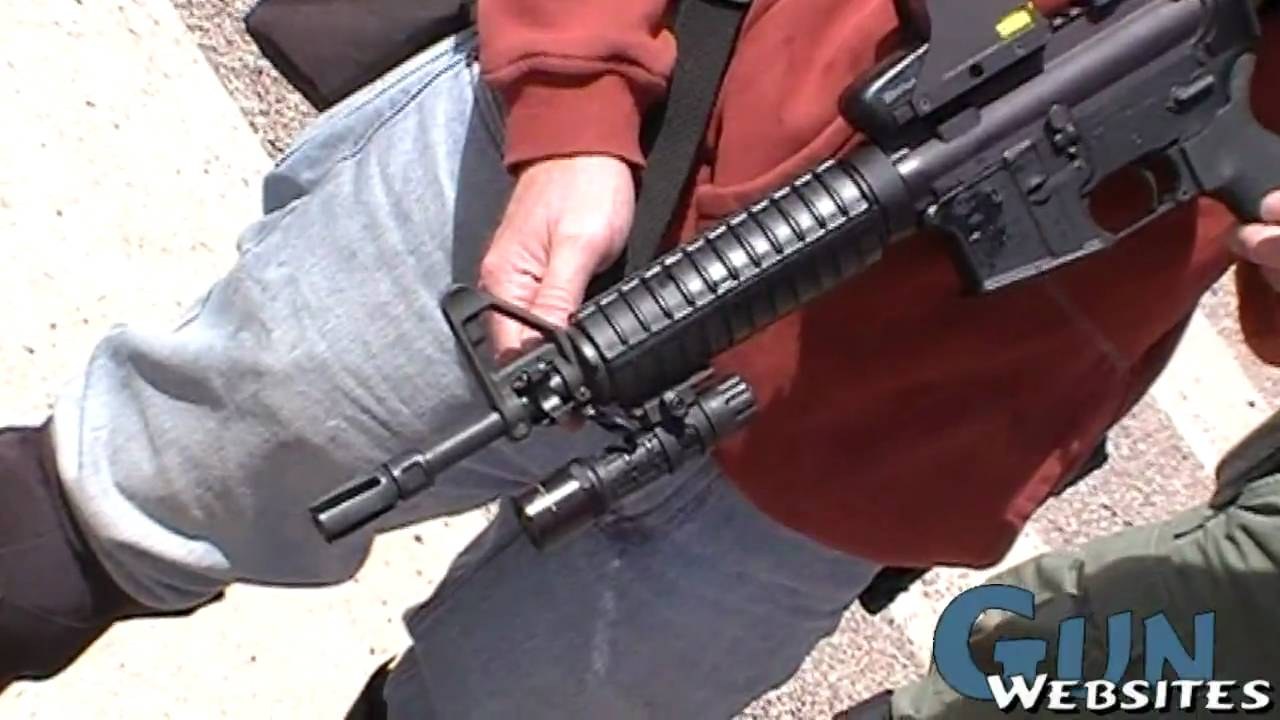
Day two of the May 2008 Michigan Defensive Firearms Institute (MDFI) visit to Tucson was Defensive Carbine Level Two, taught by Steve Fisher at the Pima Pistol Club. The course description promised a fast-paced class that would leave barrels red hot, picking up where Carbine Level One ended.
Course overview
- School: Michigan Defensive Firearms Institute, with assistant instructor Casey
- Host: Tucson Guns and Western Artifacts
- Length: 8 hours, followed by the evening Low Light Carbine class
- Prerequisite: A pistol license or certification, plus Carbine Level One or equivalent
- Required gear: A carbine (pistol-caliber carbines allowed), 1,000 carbine rounds, 200 handgun rounds, at least three magazines, an on-body magazine carrier, a handgun and strong-side holster, and a sling
Topics
- Warm-up drills, then shooting on the move and speed shooting.
- Kneeling and prone positions, and use of cover.
- Transitions to the handgun.
How the day ran
- A later start: after shooting well into the previous night, the class began about 10 a.m. with safety and range rules, then confirmed zeros at 50 yards. Most students needed only a confirmation; a few took two tries.
- Rifles: most students ran AR-15s, one ran only an AK-47 and two brought both. The AKs worked fine and kept up at the distances shot; only a few ARs had failures.
- Building up: Fisher started with the basics, as in the pistol class, then combined them in more complex drills at each shooter’s own pace.
- Controversial techniques: one example was moving the carbine to the off-side shoulder with a strong-side grip for a quick shot around cover. Fisher explained why some schools disagree with it and left the choice to each student.
- Other skills: single-side shooting and multiple targets.
- Malfunctions: when an unusual jam came up, the class stopped to learn the fix. Serious AR-15 jams usually need tension taken off the bolt face, and a pocket pliers or straight-blade knife was the best tool.
- Scoring: fine accuracy was not the point, but students taped over any hits outside the center ring to keep track of misses.
- Afternoon: after a group lunch came more complex drills such as a ladder drill, run one student at a time so both instructors could coach each run and the class could learn by watching.
Observations
- Classes in a gun-friendly state draw interesting gear. Students tried a super-short 12 gauge and a full-auto M16 during breaks.
- Running complex drills one shooter at a time costs time but pays off in safety and coaching.
Takeaways
- Carry a multi-tool or knife on the range for clearing serious carbine malfunctions.
- Learn to run whatever rifle is in front of you: an AK, an AR, or both.
- See the overall MDFI May 2008 after action report.
Originally published on After Action.net on May 12, 2008. Rebuilt from the archived report; the original photos were not preserved. See every class in the Training Log, or share your own training experience.
(Visited 1 times, 1 visits today)