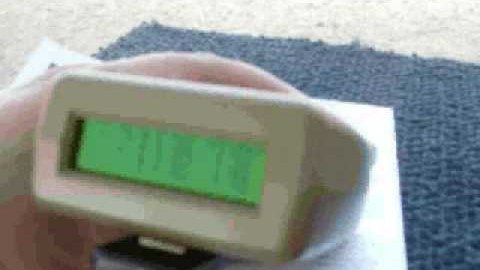
Practice without a clock is guessing. A shot timer turns every range session into data, and it is the single piece of gear that makes standard drills meaningful. Gun Websites took a close look at the Pocket Pro II, a timer used at many matches around Tucson.
What a shot timer does
- It gives the start beep, the same signal used to start a stage at a match.
- The start can be set to a random delay, so the shooter cannot anticipate it.
- It listens for each shot and records the time of the first shot, the split between every shot, the number of shots and the total time.
Reading the results
- In one short string from the video, the shooter’s first shot broke 2.2 seconds after the beep and the second came 1.5 seconds later, for 3.7 seconds total.
- In a four-shot string with a reload in the middle, the review showed a 2.53-second first shot, a 1.47-second split, then a gap of over 3 seconds where the reload happened.
- That is the value of a timer: it shows exactly where time is lost. Here, the reload was the slowest part of the string, so that is what to practice.
The Pocket Pro II
- Five buttons: a start button, a menu button, up and down buttons and a review button.
- Instructions fit on a single sheet, unlike timers that need a manual to learn.
- Runs on one 9-volt battery that lasts a long time, and has a heavy-duty belt clip.
- On a busy range, it picks up the shots of the shooter nearby rather than every gun on the line.
How to use one in practice
- Shoot every drill cold first and record the time. That is your real baseline.
- Track your first-shot time from the holster separately from your splits; they improve at different rates.
- Run the same drill on the same day each week and log the results with your after action report.
- A phone timer app is a fine way to start; a dedicated timer is louder, faster to reset and more reliable outdoors.
Drills that need a timer
- Nearly every standard on the Practice Drills page has a par time, from the 5×5 to the FAST and the Bill Drill.
- Accuracy first: a fast miss is still a miss. Use the timer to measure, then push speed only as far as your hits allow.
Based on a video from the Gun Websites YouTube channel. Take a class, write your after action report, and keep it in your training log.