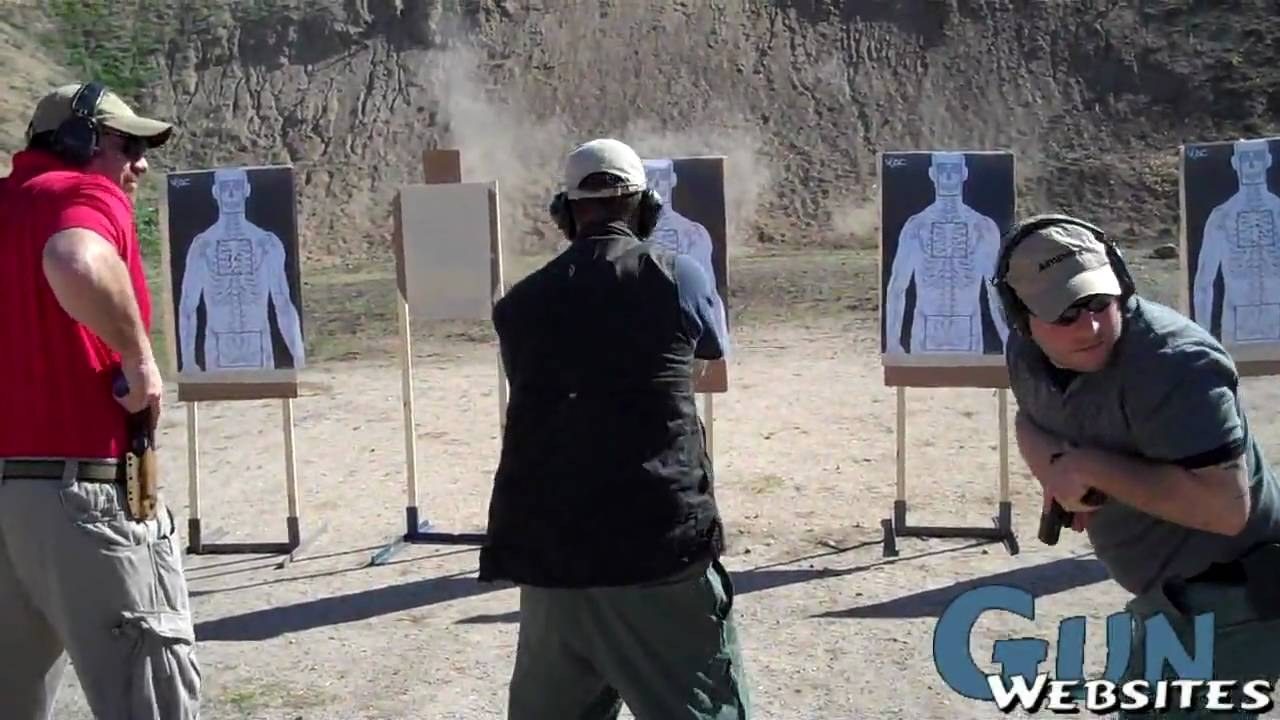
Steve Fisher of Michigan Defensive Firearms Institute (MDFI) brought his Level One Handgun and Level One Carbine classes to Tucson for the first time in January 2008, at the Pima Pistol Club. Six students took both, and because they progressed quickly, Fisher added a low light class on the second evening.
Course overview
- School: Michigan Defensive Firearms Institute, taught by Steve Fisher with assistant instructor Casey
- Course: Defensive Handgun Level One, which moves students from basic CCW training to the real-world skills that improve the odds of surviving a lethal encounter
- Cost: $125, limited to 12 students
- Prerequisite: A pistol license or certification
- Required gear: A handgun (no .22 except for medical reasons), 500 rounds, three magazines or speedloaders, a strong-side holster, eye and ear protection
- Topics: trigger control for speed and accuracy, speed versus tactical reloads, shooting on the move, multiple targets and use of cover
Fisher’s philosophy
- He sums up fighting in one word: win.
- Instead of forcing one technique, he hones each student’s own technique, coaching and offering alternatives where needed. Students must be smart and safe; beyond that, they may use their preferred methods.
- The class discussed the pros and cons of popular schools of thought. Fisher’s advice: know them all, then practice what fits your own situation, which for most students is everyday concealed carry and defense.
How the day ran
- Start: 8:45 a.m., about 42 degrees, reaching 52.
- Warm-up: basic drills to warm up both skills and muscles.
- Demonstrations: Fisher stops to demonstrate each drill with precision. One photo caught three spent cases in the air from his M&P 9mm, with every shot in a silver-dollar-sized group at 7 yards.
- Scanning: after each drill, students ran a scan.
- Nine-dot drill: a 50-round drill on a letter-size sheet with nine circles, each shot with a different technique: a ragged-hole group, five shots from the holster, single shots in succession, strong hand only and more. It works at most indoor ranges, and every shot is an effective hit no matter the score. Try Dot Torture, a similar drill.
- Group lunch: tables pulled together so nobody was left out of the discussion.
- Afternoon: movement, alternative draws, support-hand shooting and retention. Retention shooting is for when someone is about to take your gun or is physically assaulting you; demonstrations showed the choices and their consequences.
- Scoring: students taped over only shots outside the vital area; hand-sized groups were the standard, not bullseye accuracy.
Observations
- Students who were motivated and already trained moved fast enough to unlock more advanced drills.
- Benches, tables and chairs at the Pima Pistol Club kept gear together and conversation going during breaks.
- Both instructors carried Smith & Wesson M&P 9mm pistols, one with a Crimson Trace laser grip, and let students try them.
Takeaways
- A good level one class refines what you already do instead of replacing it.
- Learn several schools of thought, then practice the one that fits your life.
- Read the Carbine 1 and Low Light reports from the same visit.
Originally published on After Action.net on January 21, 2008. Rebuilt from the archived report; the original photos were not preserved. See every class in the Training Log, or share your own training experience.
(Visited 8 times, 1 visits today)