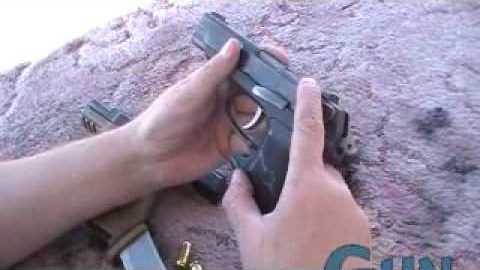
Students in pistol classes often ask about double action, single action and DA/SA triggers. Gun Websites took two Ruger pistols to the range to show the difference with live rounds, which makes the theory much easier to follow.
Double action only, broadly speaking
- Most modern hammerless striker pistols get lumped into the double action only (DAO) group, even though many, such as Glock’s Safe Action, are technically their own systems.
- What they share: a long trigger pull that works internal safeties, then a fairly crisp reset, and the same pull every shot.
How a DA/SA pistol works
- The demonstration used a 1989 Ruger P89 with an exposed hammer and a decocker.
- Double action: with the hammer down, the trigger does two jobs, cocking the hammer and then releasing it. The pull is long and heavy.
- Single action: once the first shot cycles the slide, the hammer stays cocked. Now the trigger does one job, releasing the hammer, with a short, light pull.
- Decocker: lowers the hammer safely on a loaded chamber. On this design it also engages the safety, so the pistol is carried hammer down and safety on.
The trade-off
- Every first shot is a long, deliberate double action pull. Every follow-up shot is short and light.
- Shifting between the two takes practice. Even a shooter with good trigger control, used to modern striker pistols, fired a DA/SA follow-up shot before expecting it.
- That inconsistency is why many shooters now prefer pistols with the same pull every time.
Technique notes from the video
- Release the slide by pulling it fully back and letting go, sometimes called slingshotting, rather than riding it forward.
- Check the loaded chamber indicator, and treat every pistol as loaded.
Practice it
- If you carry DA/SA, dry fire the first-shot double action pull and the transition to single action until it is automatic.
- See Practice Drills and Firearm Safety Rules.
Based on a video from the Gun Websites YouTube channel. Took a class recently? Write your After Action Report and add it to the Training Log.
(Visited 1 times, 1 visits today)